

Showing 61–90 of 114 resultsSorted by latest


- This clock has an enchanting fairy princess theme,
- 30 different melodies, divided into 3 selections,
- Decorated with natural Swarovski crystal.


- Added world-renowned CTS sound system,
- 4 Swarovski crystals and 30 melodies,
- Picture of Earth in a center with gold numerals on a dark blue surface,
- Its constructed with sophisticated dark velvet colored case.

- 30 wonderful melodies divided into three selection,
- Brown plastic case with golden parts,
- 4 LED lights glitter continuously in yellow and green.
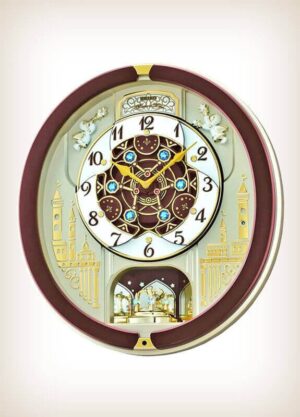

Seiko clock model QXM291B,
QXM291BRH motion clock will certainly inspire you to find a special place for this incredible Seiko clock in your living place.

- 8 LED lights in red and green color glitter,
- Decorated with 2 genuine Swarovski crystals and ballerina in the middle,
- Clock plays 16 lovely songs.
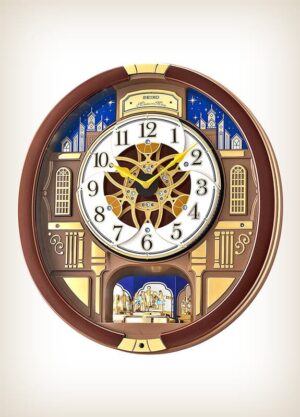
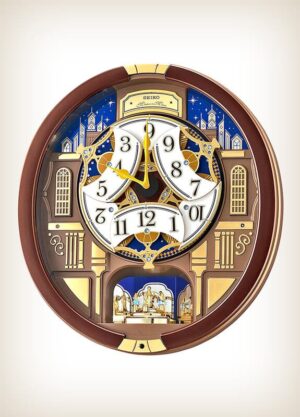
Seiko clock model QXM362BRH,
This incredible clock is framed in the brown, glanced case with the gold finishing. The clock face is colored in a textured “cedar” brown mixed with a beautiful shade of blue.


- 15 ambers colored Swarovski crystals,
- 30 different melodies divided into three selection,
- Divine silver pendulum with four Swarovski crystals,
- Automatic Night-Time Shut Off, demonstration button, and volume control.
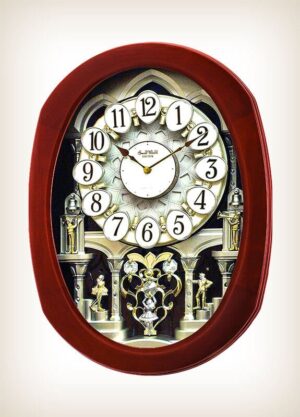
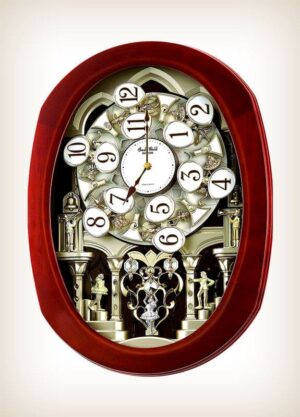
- 30 melodies sorted into 3 selections,
- 2 Swarovski crystals and LED Lights,
- Automatic night-time shut-off,
- Demonstration button and volume control.
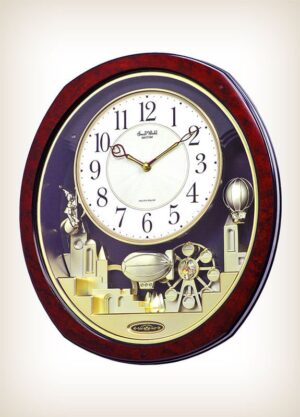
- 18 Hi-Fi melody divided into three selection,
- Beautiful, sparkling Swarovski crystal at the center,
- Automatic night-time shut off, presentation button, and volume control.


- Auto night shut-off, presentation button, and volume control,
- Three LED lights in different colors,
- Rotating pendulum with Swarovski crystals.
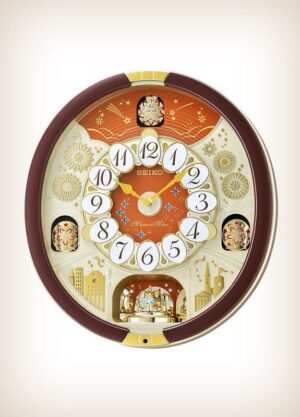
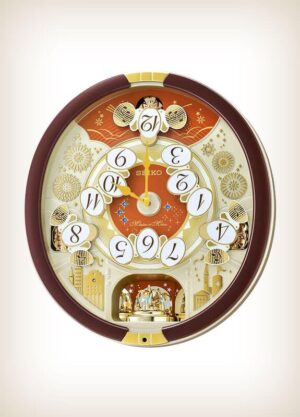
Seiko clock model QXM574BRH. This is Seiko’s Special Collector Edition from 2017. It has 12 Swarovski crystals in red and blue and 24 Hi-Fi melodies in 3 selections.
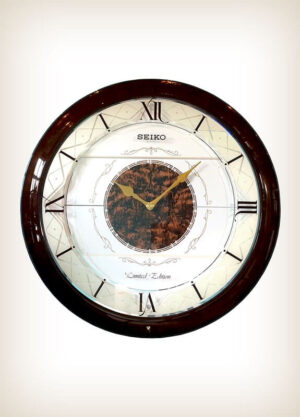
This Seiko clock model QXM282BRH is a Limited Edition, the only 2500 ever produced, also known as “Split Face”. The clock plays 6 classic melodies and has 3 wheels with 8 sparkling Swarovski crystals.
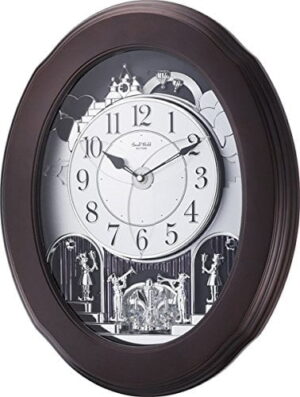
The Nostalgia Espresso is a state-of-the-art piece composed of 30 songs. Experience the magic of the motion onward with the flicker of the rotating crystal encrusted pendulum.
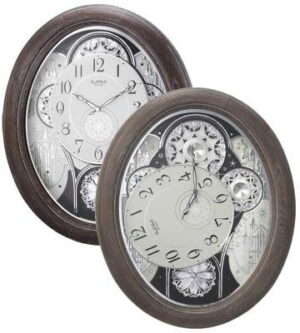
The clock is accentuated with a country wood body for that coastal driftwood glance. Show off your magical clock with the touch of a button! Your guests will love it!
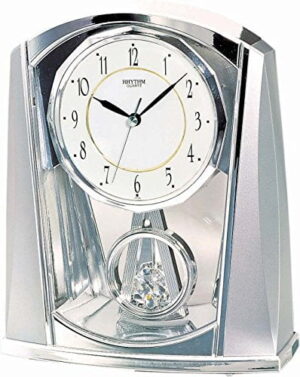
- Rhythm USA Silver Swing mantel clock,
- Shiny Silver Design,
- Desk Clock.
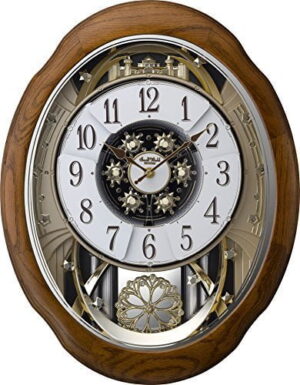
Automatic night-time shut off
Demonstration button
Volume control and on/off switch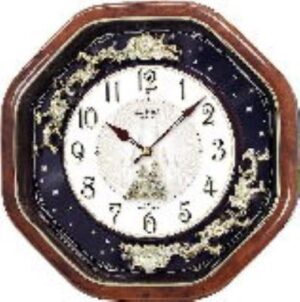
Auto night shut-off, Volume Control.
ON/OFF switch, Demo Button.
Size: 14.6″ H. x 14.6″ W.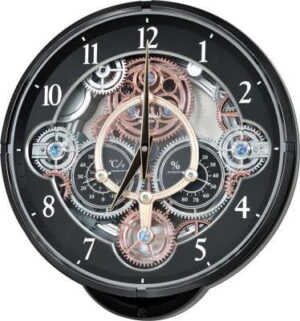
Automatic Night-time Shut Off.
Demonstration Button.
Volume Control and On/Off switch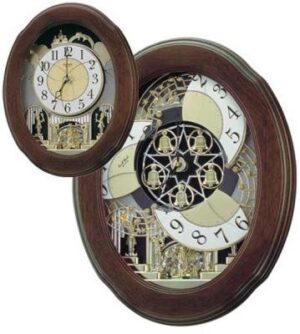
18 melodies together with 6 Beatles Songs,
Includes a Swarovski crystal pendulum.
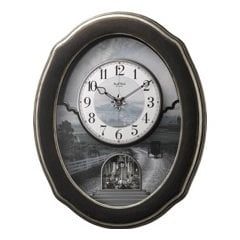
Musical magic motion clock with a dial that cracks open and moves, as music plays on the hour.
Demonstration Button.
Automatic Night Time Shut off feature.
Quartz, Battery-Operated, Musical Motion Clock.
Volume Control and On/Off switch.
Light Sensor provides automatic Night-Time Shut Off.
Real Wood Frame
Total of 30 melodies, divided into three music selections.
Plays Christmas melodies!
Rhythm 4RP745WT19 silver mirrored motion clock,
Oscillating pendulum forms an enchanting focal point,
Contemporary Motion Clock.

Manufactured to the highest quality available
Design is stylish and innovative
Great gift idea


Seiko vs. Rhythm — What’s Still Available
Seiko Melodies in Motion clocks have been produced since the 1990s and remain in active production. The clock face opens on the hour to reveal an animated scene — figurines rotating, carousel elements spinning — while one of the clock’s melodies plays. Models vary in animation complexity and melody count, from basic single-scene displays to elaborate multi-element productions. All run on batteries with automatic night shutoff.
Rhythm Small World clocks worked on the same principle — animated hourly display with melody — and were widely available until Rhythm closed its US distribution in January 2025. Stock from existing retailers is still available but won’t be replenished. If a specific Rhythm model is the target, buying sooner rather than later is the practical advice.
Both brands produced clocks at a range of price points and animation complexity. Seiko Melodies in Motion is the active collection. Rhythm Small World is available while stock lasts. The Musical Clocks FAQ covers common questions about setup, melody options, and maintenance.
Frequently Asked Questions
What is the difference between Seiko Melodies in Motion and Rhythm Small World?
Both are animated musical wall clocks that perform a display on the hour — the clock face physically moves while a melody plays. The main difference today is availability. Seiko Melodies in Motion is still in active production for the US market. Rhythm USA closed its distribution in January 2025, so Rhythm Small World clocks are available only from existing retailer stock while supply lasts.Are musical motion clocks battery operated?
Yes. All Seiko Melodies in Motion and Rhythm Small World clocks run on batteries — typically C or D cells for the motion and sound mechanism, and AA batteries for the quartz timekeeping movement.How do I set the time on a musical clock?
Most musical clocks have a time-setting knob on the back of the case. Turn it slowly to advance the hands to the correct time. Move the hands clockwise only and let the melody finish at each hour before continuing. Some models have a separate melody-off switch on the back — activating this while setting the time saves you from sitting through a full performance at every hour mark. Check the manual for your specific model if the back panel has multiple knobs — on some Seiko and Rhythm models, one knob controls time and another controls melody selection.How do I adjust the volume on a musical clock?
Most musical clocks have a volume control switch on the back or side of the case, typically offering two or three settings — low, medium, and high. Some models have a continuous dial rather than fixed positions. If your clock feels too loud even on the lowest setting, positioning it on a wall away from hard reflective surfaces helps — sound bounces off bare walls and glass, making it seem louder than it is.Questions about how animated musical clocks work, melody selection, battery life, and the difference between Seiko and Rhythm are covered in the Musical Clocks FAQ.