


Showing all 3 resultsSorted by latest

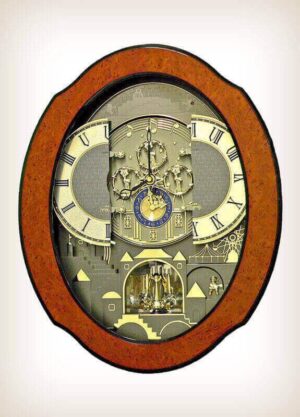

The Timecracker Ultra II by Rhythm Clocks: is a captivating blend of sophistication and charm. With its wooden frame and intricate black face featuring a unique jigsaw puzzle design, this wall clock adds a touch of elegance to any space. Enjoy the soothing melodies and rotating dial, accompanied by the gentle glow of the gold pendulum with Swarovski crystals. Perfect for bringing a touch of magic to your home, this Rhythm clock offers 30 melodies to choose from and stays silent in dark rooms thanks to its light sensor technology.


- Pendulum decorated with Swarovski crystals,
- 30 melodies divided into three selections,
- Automatic Night Time Shut Off, On/Off Switch, and Volume Control.


- Added world-renowned CTS sound system,
- 4 Swarovski crystals and 30 melodies,
- Picture of Earth in a center with gold numerals on a dark blue surface,
- Its constructed with sophisticated dark velvet colored case.
A Dial That Splits in Two
The defining feature of the Timecracker is its two-piece split. At the hour, the dial face separates along a central axis — each half rotating outward and away until the full internal mechanism is exposed. Behind the dial, rotating gears, decorative elements, and Swarovski crystal pendulums continue moving throughout the melody. When the performance ends, the two halves return to their original position and the clock resumes normal timekeeping.
This mechanism has been refined by Rhythm across more than 30 years of production. Early Timecracker models used Rhythm’s Dynamic Wave Sound (DWS) system; later versions moved to the Clarion Tone System (CTS) and eventually Creative Sound, each generation improving melody quality and mechanical reliability. The result is a series with a proven track record that other Rhythm series simply don’t have.
Most Timecracker models play 30 melodies across three selectable banks — popular/folk, classical, and Christmas — with volume control and automatic night shut-off included as standard. Frame materials range from MDF with burl wood veneer to solid wood depending on the model.
If the two-piece split appeals to you but you want a three-part variation, the Tri-Cracker series extends the same concept with an additional section. For something with a more elaborate multi-piece opening, the Nostalgia series is the natural next step.
Frequently Asked Questions
How does the Timecracker dial motion work?
At the top of each hour, the dial face splits into two equal halves along a central vertical axis. Each half rotates outward — away from the centre — while the internal mechanism beneath becomes visible. Gears rotate, the pendulum spins, and a melody plays throughout the sequence. The entire display lasts approximately 30 to 60 seconds before the dial closes and resets.How many melodies do Timecracker clocks play?
Most current Timecracker models play 30 melodies divided into three banks: Group A covers popular and folk selections, Group B covers classical pieces, and Group C covers Christmas and seasonal music. Earlier models played 18 melodies across similar groupings. The specific melody list for each model is included on the individual product page.Is the Timecracker series suitable for a living room?
Yes — the Timecracker is well-suited to living rooms and open spaces where the hourly performance can be seen and heard clearly. The automatic night shut-off sensor silences the clock in low light, making it practical for rooms adjacent to sleeping areas. For smaller or quieter spaces, the volume control allows the melody level to be adjusted to suit the environment.Full buying guidance and troubleshooting for all Rhythm clocks is available in the Rhythm's FAQ.