

Showing 31–60 of 234 resultsSorted by latest


German carved-style cuckoo clock with 8-day movement. Authentic black forest cuckoo clock by Hekas. The clock can be silenced manually with a lever. The melodies change every hour between the Happy Wanderer and Edelweiss.


Size : about W95cm x D108cm x H 204cm
Weight: About 480g (including batteries)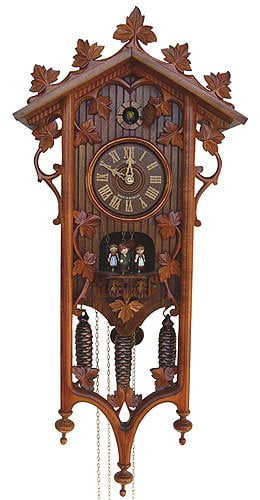
Chalet style
The 8-day rack strike movement
New wooden dial with roman numerals and hands
Features five leaves and one bird design
Plays 12 different melodies
The pendulum swings back and forth
Hand-carved solid Linden wood case with traditional walnut finish
Grape leaves, Maple leaves, carved bird top
Dimensions: 8 x 12 x 6 inches
Schoolhouse style clock design
Dark brown solid oak case
Westminster/Whittington quarter-hour and hourly chime
Cuckoo bird chimes every half hour and an hour
Hand-made in Germany by skilled artisans
1-day movement


This unique wall decor is expertly handcrafted with a black-hued wooden case, complete with gleaming chrome-finished accents and textured leather panel for a contemporary twist on a time-honored classic. A sculpted eagle, handcrafted in fine artist’s resin, soars at the top of the case.

Oak stag KA 856 EX standing deer hunting cuckoo clock by Hekas with 8-day mechanical REGULA movement.

Honor an essential piece of American farming history with this Farmall cuckoo clock, an officially licensed Farmall Times. This handsome barn-shaped wall clock showcases artist Charles Freitag’s full-color farming imagery beneath a vintage-inspired clock face that features an iconic Farmall logo.


Trenkle Quartz cuckoo clock Black Forest house with music TU 4202 QM. The clock has a battery-operated movement with automatic night-off.


This German cuckoo clock from the Black Forest has a mechanical REGULA movement from the market leader SBS-FEINTECHNIK in the Black Forest/Germany. The clock can be silenced manually with a lever. The melodies change every hour between the Happy Wanderer and Edelweiss.

Sentinels of the Forest Cuckoo Clock, two pieces of famed wildlife artist Terry Doughty art of timber wolves combine on a cuckoo clock. The charm of a traditional chalet-style cuckoo clock and finished in a rich mahogany tone.


If you are a nature lover then there is no doubt that you will be fascinated with the Moments Of Majesty cuckoo clock. Perfectly hand-crafted to emphasize every single detail, this handcrafted Bald Eagle cuckoo clock shows the beauty of the natural wilderness.

Cuckoo Clock with a moving wood chopper by Hekas is a piece of art that will certainly find a perfect spot in your interior. The wooden dial has Roman numerals and elegant wooden hands.

Torre & Tagus motion birdhouse clock 901658 features an animated bird beak movement and a detachable swinging pendulum. The clear, minimalist clock design makes it proper for any home or office environment.


- Hand-carved roof
- 12 melodies
- Certificate of Authenticity
- Required 3 C batteries
- Night time-off sensor


Enjoy childhood memories with this Hones HO 1288 cuckoo clock little black forest house. Made of dark wood, the clock showcases a mountain cottage. Recognizable hand-made figurines of well-known characters adorn the clock’s face.

Uniquely designed Disney cuckoo clock with a real wood case featuring 42 Disney characters from the most beloved animated classics, including Mickey Mouse and Minnie Mouse, Donald Duck, Goofy, Pluto, Cinderella, Snow White, Ariel, and other Disney Princess characters, the Winnie-the-Pooh characters, and more!

Celebrate your favorite dog breed every minute of the day with the Playful Pups cuckoo clock, featuring the art of acclaimed award-winning artist Linda Picken.


PEANUTS Halloween Party cuckoo clock. Features eight PEANUTS characters, including Snoopy, Charlie Brown, Woodstock, Linus, and Lucy.


This impressive clock case is shaped like the castle of the Wicked Witch of the West and is superbly handcrafted from top to bottom, including seven hand-painted figures of your favorite characters.

Amazing pictures of famous American artist Thomas Kinkade. Two pictures of an idyllic nature decorate this unique home decor piece. Golden metal pinecones and a waving pendulum additionally decorate the cuckoo clock.

No person would prefer Disney’s character, Simba. You have to enjoy the spirit of the Pride Lands with this extraordinary The Lion King wall clock. The clock shows the Savannah sky with numerals and black hands in the center.

The Traditional Vine Leaves cuckoo clock by Adolf Herr is adorned with hand-carved vine leaves and cuckoo chicken.

There is no better decoration than this Hones HO 6777T cuckoo clock with a turning mill-wheel by Hones. Amazing, colorful details adorn the clock, making it unique and cheerful.

This Hekas KA 3610-8 cuckoo clock has a unique lifestyles-like picket handpainted cuckoo,
Night shut off: Manually – The clock can be silenced manually with a lever,
It has a mechanical excessive lengthy-lifestyles rack strike motion.


How to Choose a Cuckoo Clock
The first decision is mechanical vs. quartz, and it matters more than style. Mechanical movement clocks require daily or weekly winding — pulling the chains to raise the pine cone weights. That interaction is part of the appeal for many owners. The movement is entirely gear-driven, the cuckoo call comes from two bellows inside the case, and a well-maintained mechanical clock will run for decades. A 1-day movement needs winding every 24 hours; an 8-day movement once a week. For most people, the 8-day is the more practical choice.
Quartz cuckoo clocks run on batteries with no winding required. The cuckoo sound comes from a digital chip, and most include an automatic night shutoff using a light sensor. They’re lower maintenance and typically less expensive — a reasonable option if you want the look without the upkeep.
Style is the second decision. Chalet cuckoo clocks replicate traditional Black Forest farmhouses, often with moving figurines, dancers, or watermill wheels activated by the music. Carved cuckoo clocks — including the hunting style — feature elaborate woodwork with stag heads, leaves, rifles, and wildlife motifs. Themed cuckoo clocks cover everything from Bradford Exchange collector pieces to Peanuts characters. Modern cuckoo clocks take the cuckoo mechanism into contemporary design — minimal cases, non-traditional materials, designer aesthetics.
If authenticity matters to you, look for the VdS certification seal. Clocks carrying it were made in the Black Forest using mechanical movements — that’s the guarantee. The Authentic Black Forest cuckoo clock collection covers all VdS-certified models on this site. For brand-specific browsing, the major German makers — August Schwer, Adolf Herr, Anton Schneider, Rombach & Haas, Engstler, Hönes, Hekas, and Trenkle — are all represented here. Have questions? The Cuckoo Clocks FAQ covers the most common ones.
Frequently Asked Questions
What should I look for when buying a cuckoo clock?
The first decision is mechanical versus quartz. For authenticity and longevity, mechanical is the clear choice — a well-made Black Forest mechanical clock will outlast any quartz equivalent by decades. Within mechanical, choose between a 1-day movement (winds daily) and an 8-day movement (winds weekly) — for most buyers the 8-day is more practical. Look for the VdS certification seal, which guarantees the clock was made in the Black Forest region of Germany with a mechanical movement and bellows-driven cuckoo call. For style, chalet and carved are the two main traditions; both are available across the full price range.How do I maintain and care for a cuckoo clock?
Mechanical cuckoo clocks need professional servicing every 5 to 10 years — cleaning and oiling the movement keeps it running accurately for decades. Between services, keep the clock away from direct sunlight, humidity, and heat sources, all of which affect both the wood case and the movement. Wind the chains slowly and evenly, never yank them. For quartz models, replace the batteries once a year even if the clock is still running — a weakening battery causes erratic behaviour before it dies completely.How long do cuckoo clocks last?
A well-made cuckoo clock can last decades — even generations. Mechanical Black Forest clocks from reputable makers like August Schwer or Adolf Herr regularly run for 30 to 50 years with proper care, and antique examples from the early 20th century still tick today. Quartz cuckoo clocks have a shorter practical lifespan, typically 10 to 20 years, limited mostly by the availability of replacement parts rather than the movement itself. The biggest factor isn't the clock — it's maintenance. A mechanical cuckoo clock that gets serviced every 10 to 15 years, kept level, and wound consistently will outlast most modern decorative items by a wide margin.How do I know if a cuckoo clock is authentic Black Forest?
Authentic Black Forest cuckoo clocks carry the VdS certification seal, which guarantees the clock was made in the Black Forest region of Germany. Look for the seal on the back of the clock or in the packaging. Beyond the seal, genuine Black Forest clocks have hand-carved wooden cases, real pinecone-shaped weights, and mechanical movements with a warm, resonant cuckoo call produced by bellows — not a speaker. The movement plates are typically stamped with the manufacturer name.